
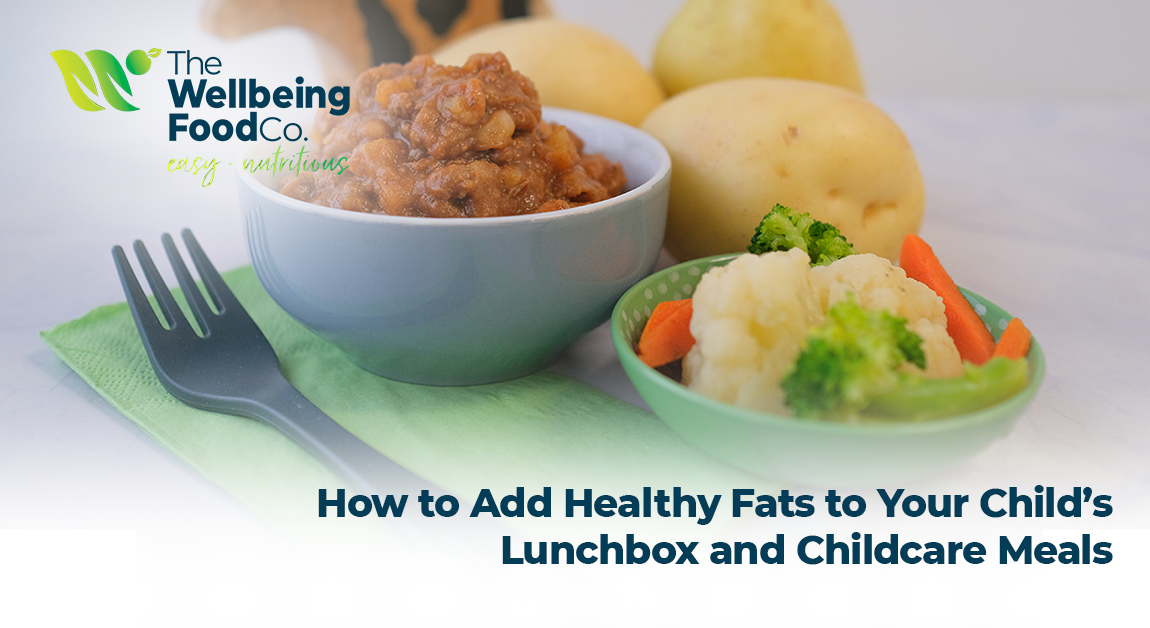
Simple, nutritious additions that support growth, brain development and fuller tummies.
Healthy fats are essential for children — especially in the early years when their brains, hormones and bodies are developing rapidly. But many parents and educators aren’t sure how to practically add healthy fats to everyday meals, particularly lunchboxes and childcare menus where food needs to be safe, simple, and centre-friendly.
This guide shows you easy, child-approved ways to include healthy fats in meals without making food heavier, greasier or more complicated. Think: avocado in a wrap, chia in yoghurt, olive oil on veggies — tiny additions that make a big nutritional difference.
If you’re new to healthy fats, start with our parent-friendly explanation here:
What Are Healthy Fats? A Simple Guide for Parents
Why Add Healthy Fats to Children’s Meals?
Healthy fats help children:
- Stay fuller for longer
- Maintain steady energy
- Support brain development
- Absorb vitamins A, D, E & K
- Build strong cells and hormones
- Develop healthy appetite regulation
And importantly:
Healthy fats are not the same as deep-fried foods, processed snacks or “junk” fats. Wholefood fats provide slow, steady fuel.
Easy Healthy Fat Additions for Lunchboxes
These swaps and additions take seconds and work with most school or childcare guidelines.
1. Add Avocado to Sandwiches and Wraps
- Spread instead of margarine
- Mix with lemon for freshness
- Combine with chicken, egg, tuna or vegetables
Avocado is rich in monounsaturated fats and incredibly toddler-friendly.
2. Use Olive Oil as a Dressing or Drizzle
Add a small amount to:
- Pasta salads
- Roasted veggies
- Couscous or quinoa
- Sandwich fillings
Olive oil is a powerful antioxidant and one of the healthiest fats for children.
3. Include Full-Fat Yoghurt
Instead of low-fat yoghurt (which often has added sugar), choose:
- Greek yoghurt
- Plain yoghurt
- Yoghurt + fruit purée
Healthy fats help with fullness and nutrient absorption.
4. Add Chia or Flaxseeds to Lunchbox Snacks
Perfect mixed into:
- Yoghurt
- Muffins
- Oat bars
- Mini pancakes
Both chia and flax support brain development and digestion.
5. Pack Cheese Slices or Cubes
Cheese offers healthy fats + calcium + protein.
Pair with:
- Wholegrain crackers
- Veggie sticks
- Fruit slices
Cheese is also great for picky eaters needing energy-dense foods.
6. Include Hummus or Seed-Butter Dips
Dips are a great way to add legumes and healthy fats.
Try:
- Hummus + veggie sticks
- Sunflower seed butter + rice cakes
- Ricotta + fruit
Sunflower butter is nut-free and childcare-safe.
7. Offer Hard-Boiled Eggs or Mini Egg Muffins
Eggs include omega-3s, choline, protein and healthy fats.
Easy options:
- Egg wedges
- Mini frittatas
- Veggie egg cups
Perfect for meal prep.
How to Add Healthy Fats to Childcare Meals
Childcare menus should intentionally include healthy fats — not as a luxury, but as a developmental requirement.
Here are centre-friendly, allergen-aware ways to boost fat quality safely:
1. Cook Veggies in Olive Oil Instead of Adding Butter Later
This:
- Improves flavour
- Enhances vitamin absorption
- Creates consistent taste toddlers enjoy
Olive oil is allergy-friendly and ideal for large-scale cooking.
2. Add Avocado to Toddler Plates Where Possible
Great in:
- Sandwiches
- Wraps
- Salads
- Warm rice bowls
- Cold pasta salads
Soft, safe and nutrient-dense.
3. Include Oily Fish in the Menu Weekly
Small additions go a long way:
- Salmon pasta
- Tuna patties
- Fishcakes baked, not fried
Omega-3s are essential for brain development — and often lacking in modern kids’ diets.
4. Use Hummus, Ricotta or Yoghurt as Spreads or Sauces
These add:
- Natural healthy fats
- Protein
- Creaminess children love
Ideal for wraps, veggie trays, and toddler snack rotations.
5. Choose Full-Fat Dairy for Children Under 2
Avoid low-fat alternatives for young children unless medically advised.
Full-fat dairy provides calories, healthy fats and key nutrients.
6. Add Seeds Into Baking or Meals (Where Safe)
Chia and flax can easily boost nutrient density in:
- Muffins
- Pancakes
- Oat bars
- Smoothies
- Yoghurt cups
Note: Seeds are generally childcare-safe, but always check local policies.
Quick Healthy-Fat Lunchbox Builder (Use This Formula)
Choose one from each category:
Healthy fat:
Avocado | Olive oil | Chia/flax | Cheese | Yoghurt | Hummus | Seed butter | Egg
Protein:
Chicken | Tuna | Eggs | Beans | Lentils | Yoghurt | Cheese
Carbohydrate:
Wholegrain bread | Wrap | Pasta | Rice | Couscous | Crackers | Potatoes
Fruit/veg:
Cucumber | Capsicum | Berries | Carrot | Pear | Tomato | Steamed veg
→ Combine into sandwiches, bowls, snack plates or bento-style lunches.
How This Fits Into Childcare Menu Planning
Healthy fats must appear across the week, not just in isolated meals.
A high-quality childcare menu should include:
- Olive oil in cooking
- Full-fat dairy (where age-appropriate)
- Legume-based dips and spreads
- Oily fish weekly
- Avocado where feasible
- Seeds in snacks, baking or cereals
To see how healthy fats integrate into balanced childcare menus, explore:
- Our Childcare Menus
- Best Sources of Healthy Fats for Kids (With Portion Ideas by Age)
Final Thoughts: Small Additions Create Big Wins
Healthy fats don’t require complicated recipes or specialty foods.
Small additions — a spoon of chia, a drizzle of olive oil, a slice of cheese, a few pieces of avocado — can transform your child’s nutrition and help them feel fuller, more energised and more focused.
If your childcare centre wants help designing balanced, fat-conscious menus that support early learning and growth, we’re here to help.
Enquire or book a discovery call today.
Comments are closed